
What if the most dangerous part of a DeFi transaction is not the swap you can see, but the permission you granted weeks ago and forgot? That question sits at the center of modern wallet security. A browser extension can make decentralized finance easier to navigate, yet convenience also creates a larger surface for mistakes: the wrong network, an unlimited token allowance, a deceptive contract, or a transaction whose consequences are difficult to interpret.
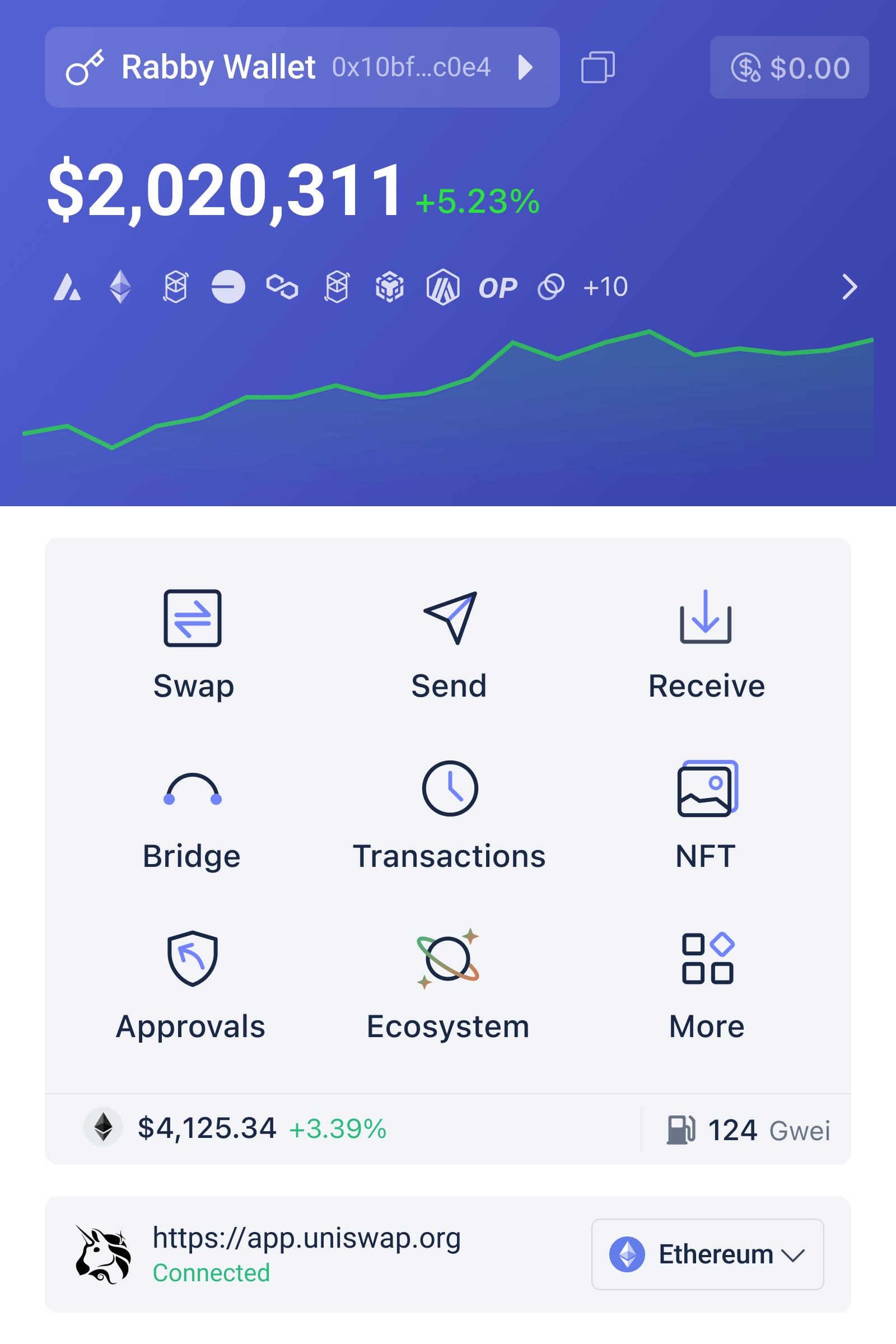
Rabby Wallet is designed for users who move across Ethereum-compatible networks and want more context before signing. Its value is not simply that it stores assets or connects to decentralized applications. The more interesting function is interpretive: it can help users understand what a transaction and its token permissions are attempting to do. That does not turn a wallet into a security guarantee. It changes the quality of the decision a user can make.
Why token approvals deserve more attention than balances
Many DeFi users understand the basic distinction between a wallet balance and a token approval only after something goes wrong. A balance describes what an address currently holds. An approval is a permission recorded by a token contract, allowing another address—often a decentralized exchange, lending protocol, bridge, or aggregator—to spend a specified amount of that token on the wallet’s behalf.
The important detail is that an approval is separate from the transaction that uses it. A user may approve a token today and make a swap tomorrow, next month, or never. If the allowance remains active, the permission may continue to matter even after the original application has been forgotten. An approval is therefore better understood as a standing capability than as a one-time action.
Some applications request a limited allowance matching the intended transaction. Others may request a very large or effectively unlimited allowance to avoid asking for approval repeatedly. The latter can reduce friction and sometimes save a future transaction, but it expands the potential damage if the approved contract is compromised, malicious, incorrectly integrated, or used on the wrong network. The trade-off is not “safe versus unsafe” in the abstract; it is convenience and lower transaction friction versus narrower exposure.
This is where token approval management becomes a practical discipline. Users should be able to identify which contracts hold permissions, determine whether those permissions are still necessary, and revoke or reduce allowances when the risk no longer justifies the convenience. Revoking an approval is itself an on-chain transaction, so it normally requires network fees and does not erase historical activity. It changes future spending authority.
How Rabby’s browser extension fits into the signing process
A browser wallet sits between a decentralized application and the blockchain. When an application requests a connection, the wallet helps establish which account and network are being used. When the application prepares a transaction, the wallet presents the request for approval or rejection. The user remains responsible for confirming the action, but the interface can make the request easier—or harder—to evaluate.
For DeFi users, the most useful mental model is not “the wallet verifies everything.” It is “the wallet provides another inspection layer.” A transaction simulation or warning can help surface the expected asset movement, a suspicious approval, a likely failure, or a mismatch between the selected chain and the user’s intention. These signals are valuable because raw transaction data is not written for ordinary human reading.
They are not infallible. Simulations depend on the state of the blockchain and the ability of software to model a contract’s behavior. Complex protocols, unusual token designs, rapidly changing liquidity, and malicious contracts can create cases in which a preview is incomplete or misleading. A clean-looking prompt should never be treated as proof that a protocol is trustworthy.
Users who want to install the extension should begin from a verified source and check that the browser installation, account, and network configuration match their expectations. For readers comparing setup instructions, the rabby wallet download resource can serve as a starting point, but the same security rule applies: verify the source, avoid look-alike extensions, and never enter a recovery phrase into a website or support form.
Multi-chain convenience creates a new category of error
Calling a wallet “multi-chain” can sound like a simple feature checklist. In practice, it means the user is managing several environments with different applications, fee currencies, contract deployments, bridge risks, and transaction histories. Two networks may use similar addresses and token names while representing entirely different assets or contracts.
That similarity is useful for interoperability but dangerous for attention. A user may believe they are interacting with a familiar token while actually approving a contract on another chain. A decentralized application may support several networks but have different liquidity or contract addresses on each. A wallet can display network context and transaction details, yet it cannot decide whether the user’s investment thesis is sensible or whether a bridge’s economic and technical risks are acceptable.
A durable workflow is therefore more valuable than a single warning. Before signing, check the network, the application domain, the contract interaction, the asset being spent, and whether the requested approval is limited or broad. After using a protocol, review permissions periodically. This is especially important for US users who may hold assets across several major networks and use multiple applications through the same browser profile.
One non-obvious point is that multi-chain risk is not merely additive. Each new chain can introduce another set of contracts and permissions, while the user’s attention remains finite. The operational problem becomes permission sprawl: many individually understandable approvals that collectively become difficult to audit. A wallet that improves visibility helps, but the user still needs a process for reducing stale permissions.
Rabby compared with other wallet approaches
Browser extensions focused on simplicity
A conventional browser wallet may be attractive because its interface is familiar and widely supported. For a user who mainly holds assets or makes occasional transactions, minimalism can be an advantage. Fewer panels and warnings may make routine actions faster. The sacrifice is that a simpler interface may provide less transaction interpretation, leaving more work to the user or the connected application.
Hardware wallets
Hardware wallets move key signing into a separate device, which can materially improve protection against certain browser-based threats and malware. They are a strong fit for larger balances, long-term holdings, or users who want physical confirmation before signing. They are not a replacement for transaction literacy. A hardware device can still sign an approval that grants excessive permissions if the user does not understand the request, and the workflow may be slower for frequent DeFi activity.
Custodial exchanges
Centralized exchanges can be easier for buying, selling, and holding assets, particularly for users who prefer account recovery and regulated platform processes. The trade-off is custody: the platform controls the operational environment, and withdrawals, access, and asset availability depend on its policies and systems. A self-custody extension provides direct control but transfers backup, authentication, and transaction judgment to the user.
Rabby’s natural position is between raw browser convenience and more deliberate signing workflows. It can be useful for active DeFi participants who need multi-chain visibility and transaction context. It is less suitable as a justification for signing quickly, and it does not remove the need for a hardware device when the value at risk makes isolated key storage worthwhile.
What the recent privacy disclosure means—and what it does not
On September 1, 2026, the Rabby Wallet listing in the Chrome Web Store disclosed information about data collection and usage and directed users to the developer’s privacy policy for more detail. The announcement is relevant because browser extensions operate inside an environment that can observe aspects of browsing and wallet interaction. Privacy is therefore part of wallet evaluation, not an afterthought.
The disclosure alone does not establish that a particular data practice is harmful, nor does it answer every question a privacy-conscious user may have. Users should read the stated categories, understand what is collected and why, and compare those practices with their own risk tolerance. A self-custody wallet can reduce dependence on a centralized custodian while still involving software, browser permissions, analytics, and network infrastructure.
That distinction matters. “Non-custodial” describes control of private keys; it does not mean invisible, anonymous, or free from software risk. A reasonable evaluation considers key custody, transaction visibility, extension permissions, privacy policy language, update practices, and the user’s own browser security.
A reusable approval-management routine
Before connecting to a new DeFi application, verify the application’s address and network. During the signing step, distinguish a token approval from the actual swap, deposit, or withdrawal. If the allowance is much larger than the intended transaction, ask whether the convenience is worth the additional exposure. Afterward, record which applications you used and review permissions rather than relying on memory.
For higher-value activity, separate funds by purpose. A wallet used for experimentation should not necessarily hold long-term savings. A dedicated browser profile or hardware wallet may reduce the consequences of a compromised site or extension, although no setup eliminates every risk. Keep recovery information offline and treat unsolicited support messages, airdrop claims, and urgent “security” prompts as potential attack paths.
Rabby can improve the information available at the moment of signing, which is often the point where users are most vulnerable to haste. Its limitation is equally important: better information only helps when the user pauses to interpret it. The strongest security feature in a wallet interface is not a colorful warning. It is a workflow that makes careless approval less automatic.
FAQ
Does Rabby automatically make DeFi transactions safe?
No. It can provide transaction context, simulations, and warnings that may help users identify unexpected behavior, but software analysis has limits. Users must still verify the application, network, contract, requested asset movement, and approval scope.
Why should I revoke old token approvals?
An old approval can leave a contract with continuing authority to spend a token up to the approved amount. Revoking or reducing unnecessary allowances narrows that exposure, although the revocation requires an on-chain transaction and network fee.
Is a multi-chain wallet better than a single-chain wallet?
It depends on the user’s activity. A multi-chain wallet is convenient for managing several networks from one interface, but it also increases the number of contracts, assets, and permissions that must be tracked. Convenience is valuable only when paired with disciplined network and approval checks.
The sensible way to judge a Rabby wallet extension is not to ask whether it eliminates DeFi risk. No wallet can do that. The better question is whether it helps users see the permissions they are granting, understand the transaction they are signing, and maintain control across multiple networks. For active DeFi users, that shift—from clicking through prompts to evaluating authority—is the real security upgrade.